I moved to the Bay Area in 1988, securing a job with an Architectural firm in San Francisco. The firm of 50 was probably 90% Asian, and for the first time in my life, I was the minority. Every Friday, a large group of co-workers would head to lunch in nearby Chinatown, and seemed to very much enjoy taking this foreigner from suburban upstate New York to their favorite hole-in-the-walls. Now in 70’s upstate New York, Chinese food came out of a can (I can still hear the jingle-“LaChoy makes Chinese Food!”) but here, these increasingly adventurous culinary expeditions began a process of cracking open new worlds for me. In the ensuing months and years, I would discover the pleasures of North Beach, the Mission, the Richmond, and especially, the Castro, and those discoveries paralleled my own evolution. But it started that first year, a year that culminated in my first Chinese wedding banquet. I began to feel like I belonged here.
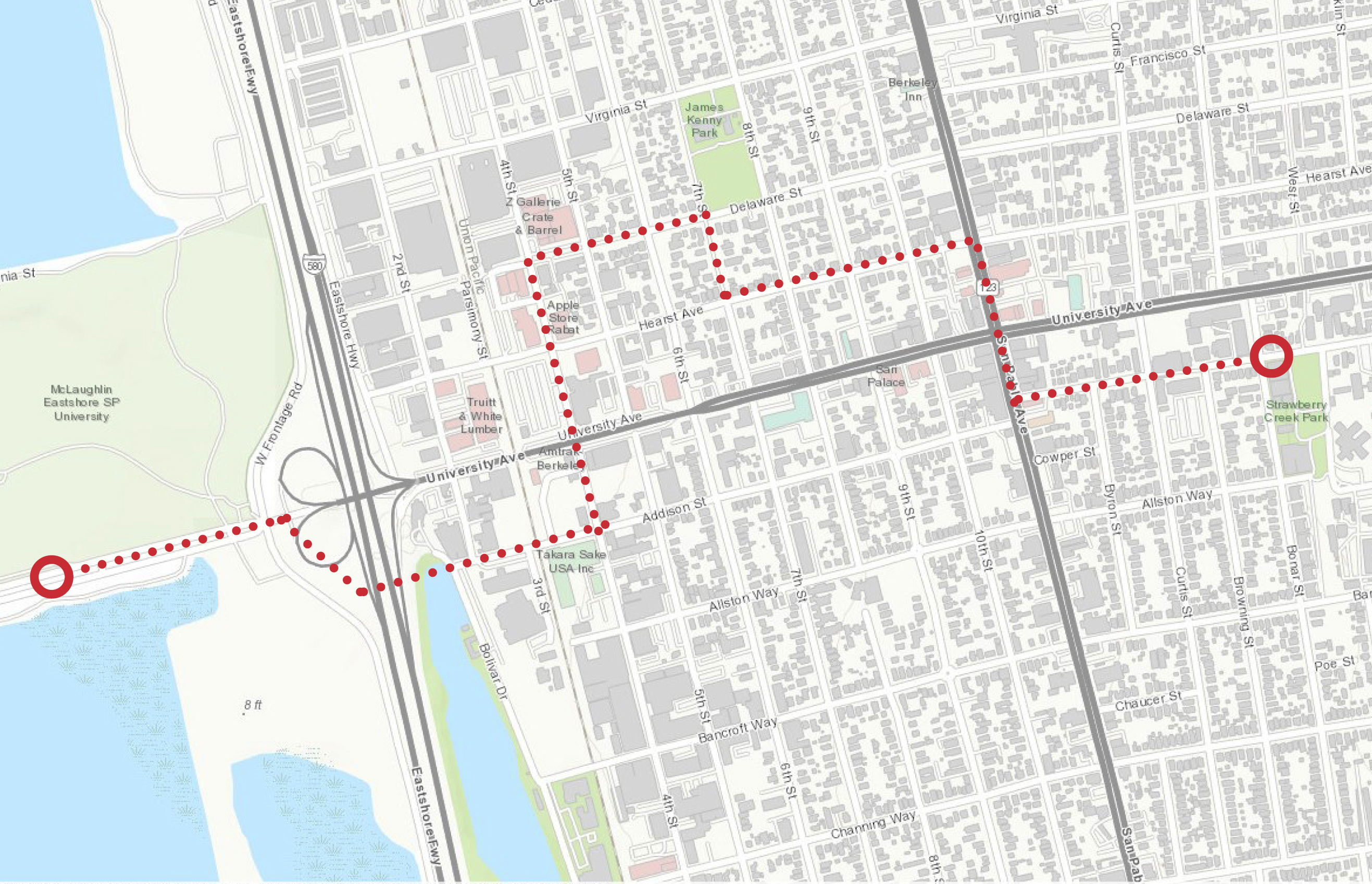
Now, some 37 years later, I find myself at the end of that same career. I was back by the Bay recently, for work, and stayed in the West Berkeley neighborhood we called home for 13 years. While there, I took one of my favorite walks, down to the Bay and back. The walk is a passage through the historical strata of the area. And in this current moment, with so much government sanctioned hate directed at “people who don’t look like me”, it was also a welcome reminder of what makes neighborhoods like West Berkeley so vibrant; a veritable United Nations of shops and restaurants. So in a time ripe for personal reflection, I found myself flipping back to 1988, to the beginnings of my journey, to hole-in-the walls on narrow Chinatown alleys. Here’s the route:
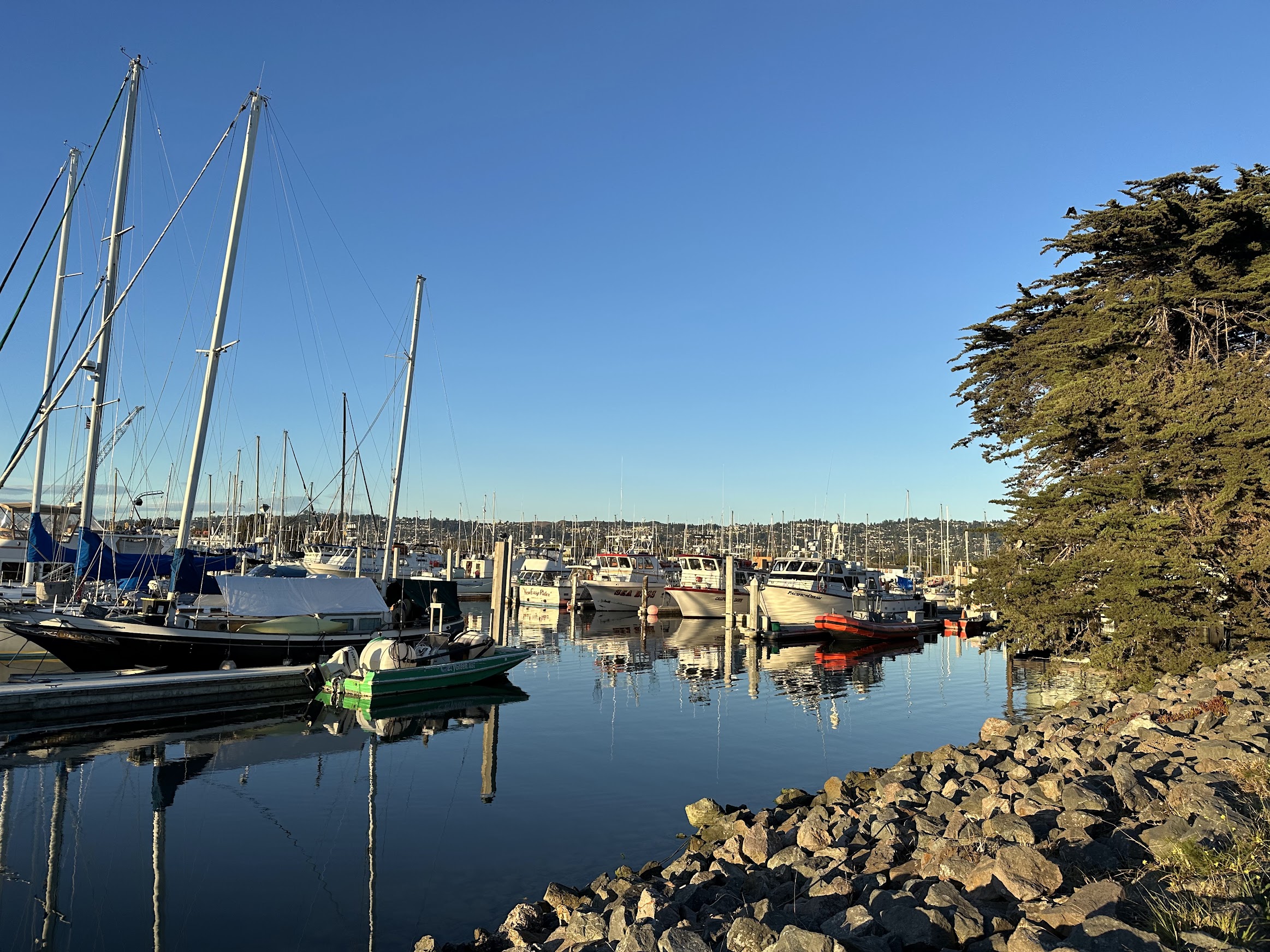
This walk begins here, along the Bay , looking out at the Golden Gate.

It is along the shores of the Bay that the first known residents of the area, the Ohlone tribe, settled. This prospect would be as they would have seen it, except of course for 175 years of development. And for about 125 of those years, the waterfront was for industry, not introspection. But the Save The Bay movement, begun in the 60’s, started a process of thinking of the Bay not as a resource to be exploited, or filled in, but to be preserved. The efforts have resulted in a necklace of parks and the connecting Bay Trail, and the open spaces near Berkeley Marina , most of it former landfills and industry, a testimony to that.

The Bayfront still does contain plenty of industry, and is a transportation workhorse. So rail and freeway must be navigated as you move inland, and you do that over a pedestrian bridge that spans the incessant drone of the oft-gridlocked I-80.

It is across this bridge, descending to 4th Street, that we encounter the Ohlone. Or at least a plaque telling us that.
The Ohlone inhabited this area long before the arrival of white settlers, this one of many sites near the Bay they called home. They came from elsewhere, crossing the Bering Strait and eventually making their way to the Bay Area. Along the Bay, in Emeryville and what is now Berkeley, they established settlements. The remnants of these villages were shellmounds, piles of shells and other detritus that grew over time., and are believed to have served as a sacred burial sites. As the Spanish arrived in the 18th century, the Ohlone tribes population declined, a dark by-product of the establishment of the otherwise beloved California Missions. The settlements faded away , the shellmounds eventually removed.
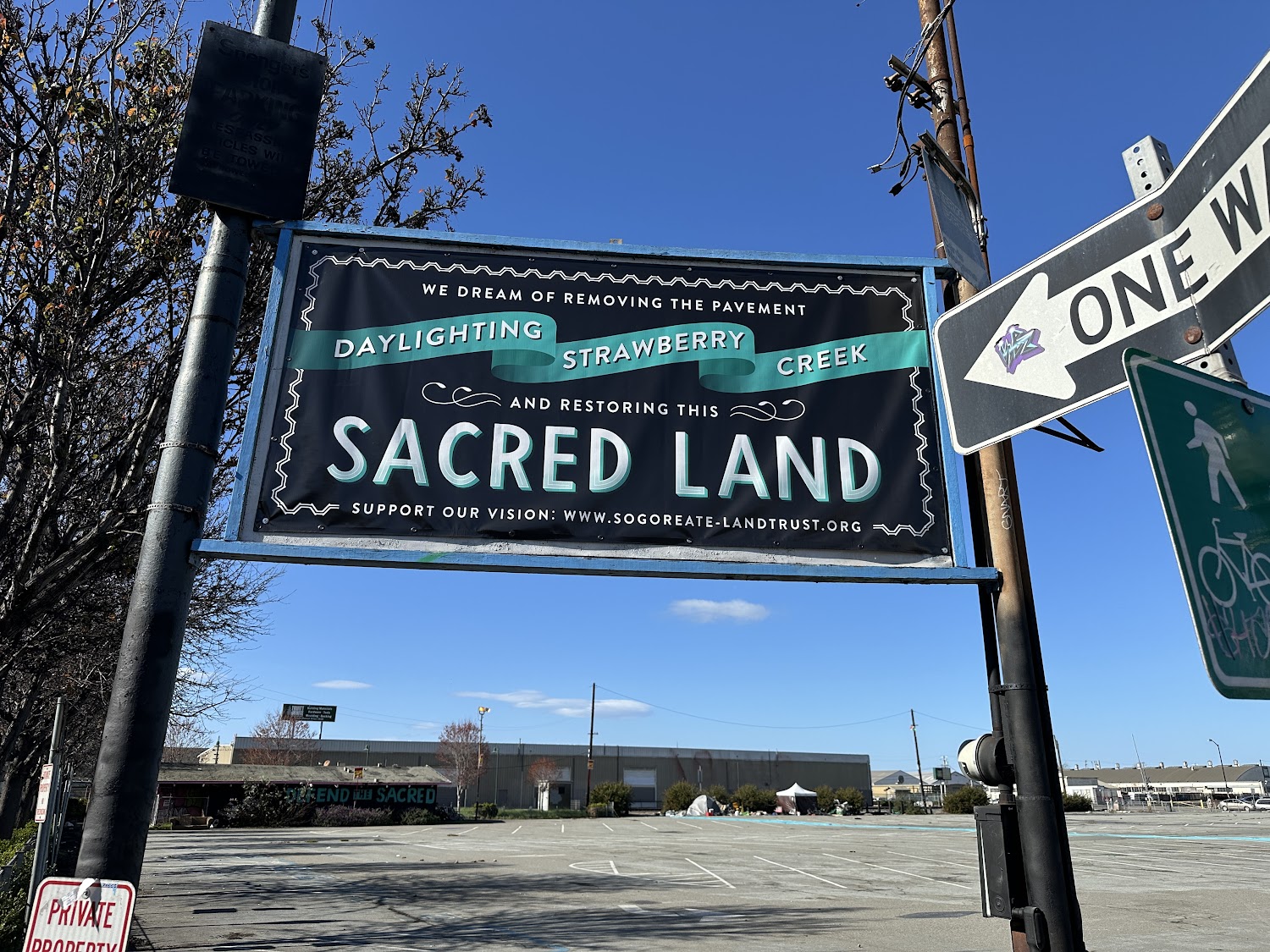
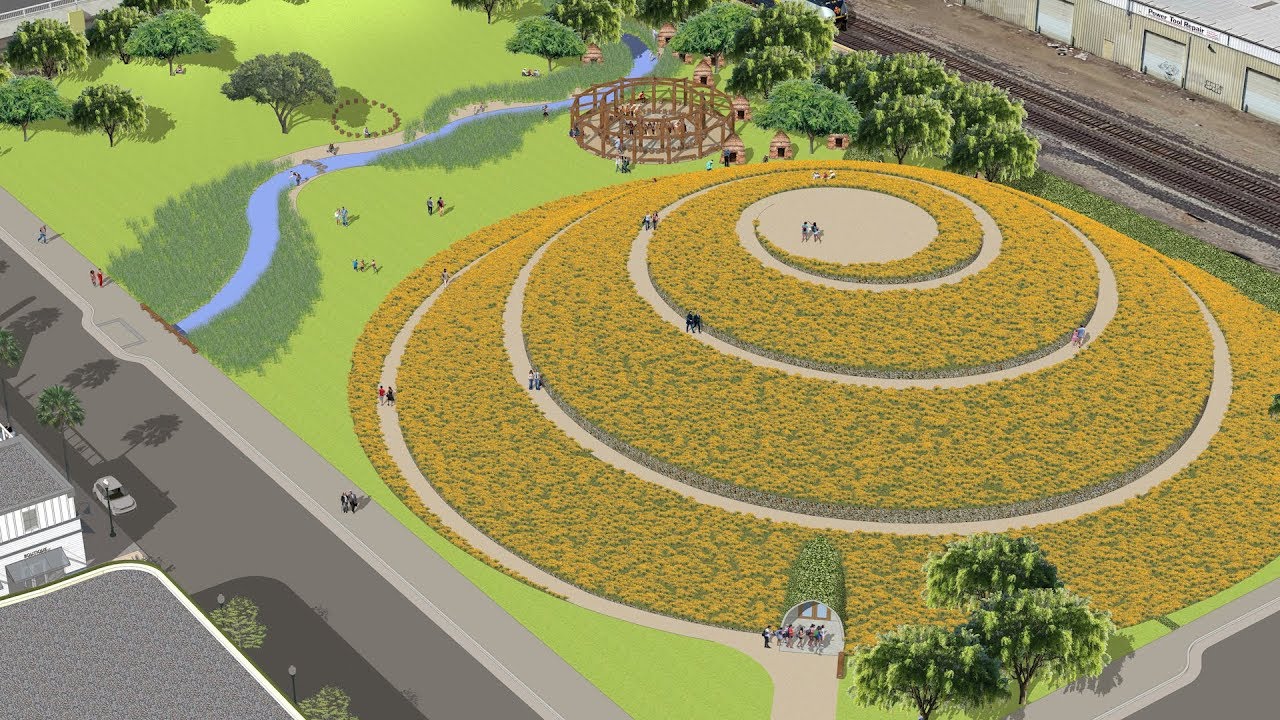
This plot of land has been a parking lot for a looooooong time. There were several proposals that included significant amounts of affordable housing (including one by my firm!), but the plans became bogged down in the byzantine world of Berkeley politics. But after a years long legal battle, the site was purchased by the Sogorea Te’ Land Trust to be developed into a cultural park, which will construct a recollection of the shellmound. At the end of the day, it is a great addition to the neighborhood, an acknowledgment of the original inhabitants.
Contemplating the original settlers of this area is brought in sharp relief by its future neighbors, the adjacent high end 4th Street shopping district. Originally low slung moderne industrial buildings, it has become the East Bay go-to for higher end shopping. so after a meditative stroll on the shellmound, one can walk a cross the street and buy Lululemon stretch pants or Sur la Table omelet pans. But the restoration and infill on 4th Street is a very pleasant strolling experience.. It just doesn’t fit the narrative of this piece. Grab a cookie at Betty’s and keep walking.
The next wave of people from other places landed here. European settlers, many from Ireland, Germany, and especially Scandinavia, established a village here in the mid 19th century, called Oceanview. Turning east on Delaware, one is in the heart of old Oceanview. Built up starting in the 1850s, one can see many fine examples of lovingly restored 19th century workmen’s cottages along these blocks, complete with picket fences and a boardwalk. The main living levels of these homes were on the second floor to avoid the frequent bay floods, and the legacy of that is the stairs.

Another feature of the neighborhood are old water tanks, a necessity before municipal water systems. Some have been restored, and are now occupied.

There are also several extant churches , which add to the feel of this as a village in the city. The Church of the Good Shepherd, at 9th and Hearst, built in 1878, is the oldest church in continuous use in the East Bay. It is a fine example of “Carpenter Gothic”, and is much loved by the neighborhood. I once took an evening meditation class there, which was great except for the fact that I would scarf down dinner beforehand, dash to the class, and then, much to my horror, listen to my stomach chatter away in the silence of the church for the next 60 minutes. My fellow Berkeley denizens’ mindfulness was sadly tuned not to the blankness of their mind, but the gastrointestinal cacophony of their neighbor, who as it turns out, could quiet neither mind nor stomach.
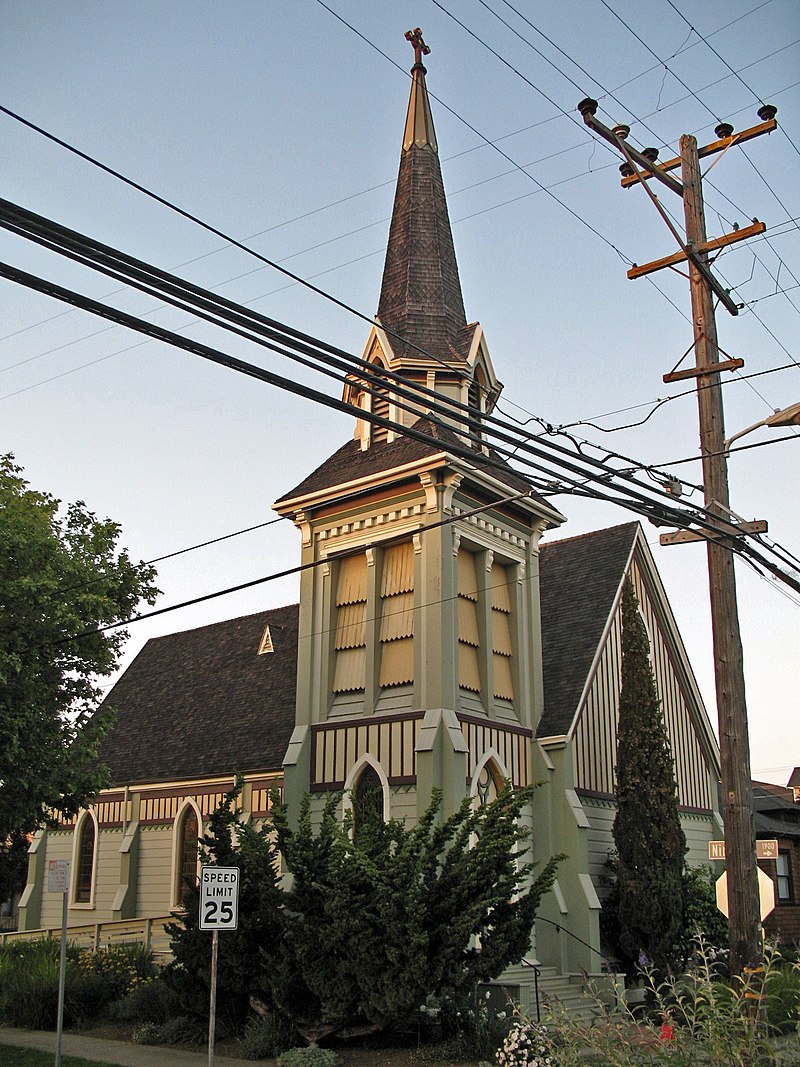
When walking these few blocks of Hearst, the theme of people from other places returns, and not just via the original settlers. These few blocks have traditionally been space where day laborers congregate looking for a days work, with these church steps serving as. a resting place. Started by the Multicultural Institute, the organization provides training, health screenings , and day laborer opportunities at multiple East Bay sites such as this. I am not sure anyone hustles more, or works harder, than these guys. And they are not taking these jobs from anyone, I can assure of that. I did this walk in February, a few weeks after the new administration took power. I had walked this street hundreds of times, and I wondered if they would even be there. There they were. For the moment at least, on the outside, things seemed as they always had been. But inside, I couldn’t imagine how different things may become.
Back to the walk along Hearst, and a slight detour down 10th to a building that always captivated me. A large contingent of the early settlers were from Finland, and they created their own meeting hall on 10th Street in 1908, the Toveri Tuppa Finnish Hall. In 1934, after workers were fed here during the 1934 West Coast General Strike, the building was vandalized by vigilante mobs. A splinter group of Finns broke away and built their own meeting hall, and this ostracized hall became known as “Red Finn Hall”.. The neighborhood now had two (!) Finnish meeting halls. And while the second one flourished, this one fell into disrepair, and has sat vacant for years. Amidst this modest neighborhood of workmens cottages and bungalows, this building is an oddity. Painted in the colors of the Finnish flag, it towers over its neighbors, with a story to tell, and no one to tell it to.

As one nears San Pablo Ave, we move into 20th century history. By now, Oceanview was a distant memory, absorbed by the growing City of Berkeley. Part of that growth was spurred by that industry along the Bay, drawing working class families from throughout the country. And many would have arrived along San Pablo Avenue, part of the original Lincoln Highway, the first transcontinental road. This is one segment of the 23 mile length road I absurdly walked in full back in 2013.
One prominent group of these new arrivals were southern blacks, part of the “Great Migration” of African-Americans escaping the Jim Crow south for the north and west. For years, the modest bungalows either side of San Pablo Ave provided more affordable housing for working class families.. The black community in Berkeley has shrunk over the years, but a vestige of it sits on San Pablo just past University- Everett and Jones BarB-Q.
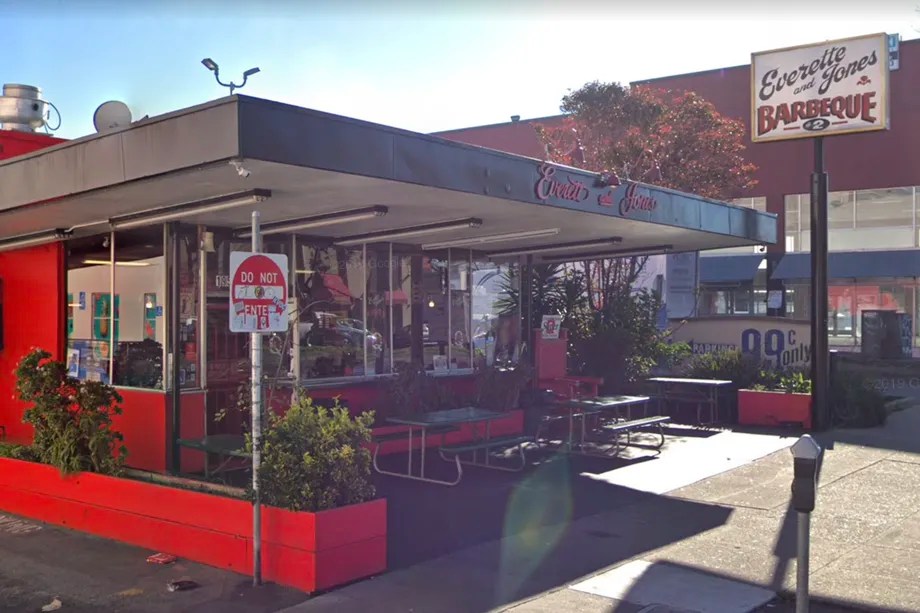
Dorothy Everett and her husband Cleveland were born in rural Alabama. According to the Everett and Jones website- “With three children and another on the way, the family decided to seek new opportunity in California. In 1952, Cleveland Everett departed Alabama first to find work and a place for the family to live and Dorothy followed later with the children. Eight years later Dorothy and Cleveland separated leaving Dorothy to care for the children. After years working at another Bar-B-Q joint, she struck out on her own.”
This location has been here since 1973, and is a throw-back to the roadside joints that were once widespread along San Pablo, a few of which I stumbled on during my walk all along San Pablo. When the wind blew in just the right direction, one could catch wafts of Bar-B-Q at home, which would then result in dinner. Great…….except before meditation.

Over time, this neighborhood along San Pablo near University has evolved. Spurred by an influx of international students from the nearby University, it has become a veritable international marketplace. And so a new chapter in this neighborhood has been layered on top of what has come before, a Berkeley version of Jackson Heights in Queens if you will. There is a remarkably diverse array of shops and restaurants here, remarkable even for the Bay Area.
This is a running list of the shops, all in 4 blocks:
- Cafe Belmo- Algerian French Bakery
- Heyma- Yemeni Coffeehouse and sweets
- Luca Cucina- Italian restuarant founded by immigrant from southern Italy
- La Marcha- Spanish Tapas restaurant
- Middle East Market- Persian Grocery and food to go
- Spanish Table- Spanish Imported groceries
- Halal Food and Meat Market
- Mi Tierra- Latin grocery
- Pyeong Chang_ Korean Tofu House
- Kabana- Pakistani Restaurant
- Sweet Bites- Latina mother daughter owned bakery
- Daruna Sushi
- 3 taquerias
- Finally , it is apparently THE place top shop for a Sari in the Bay Area
A brief peek:
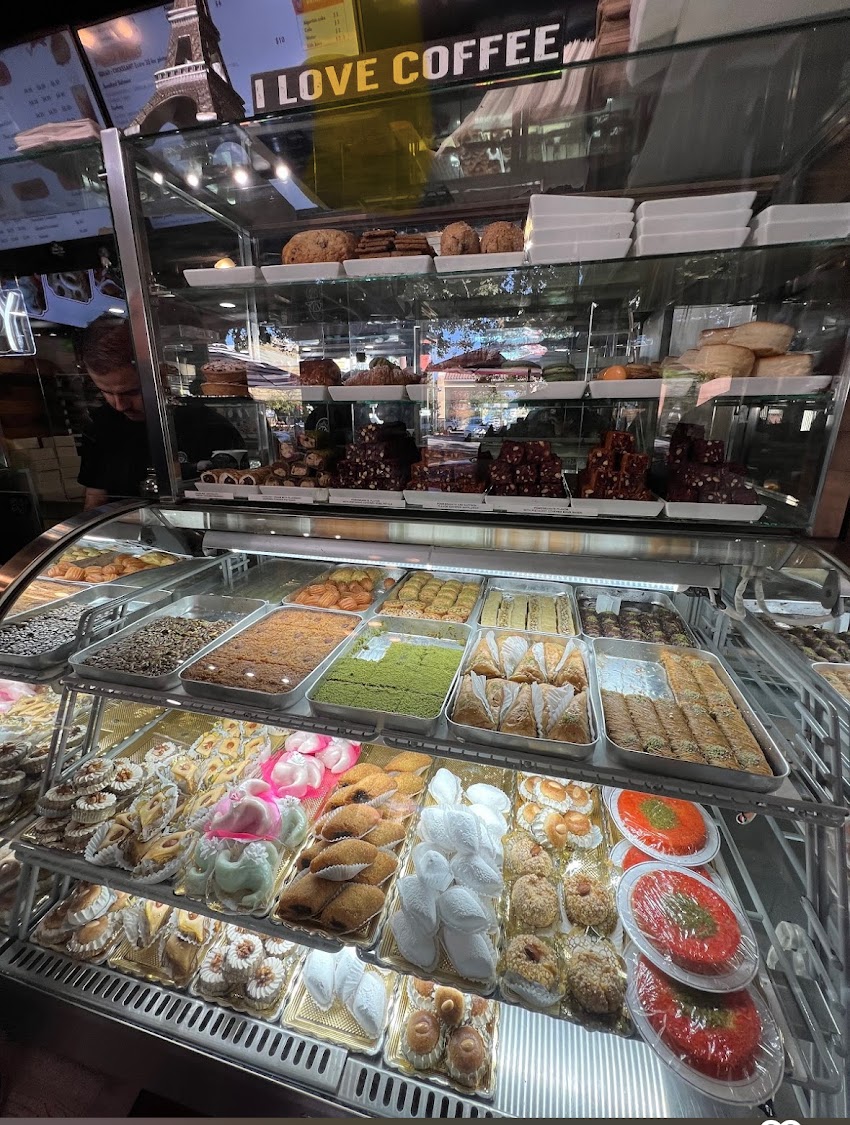


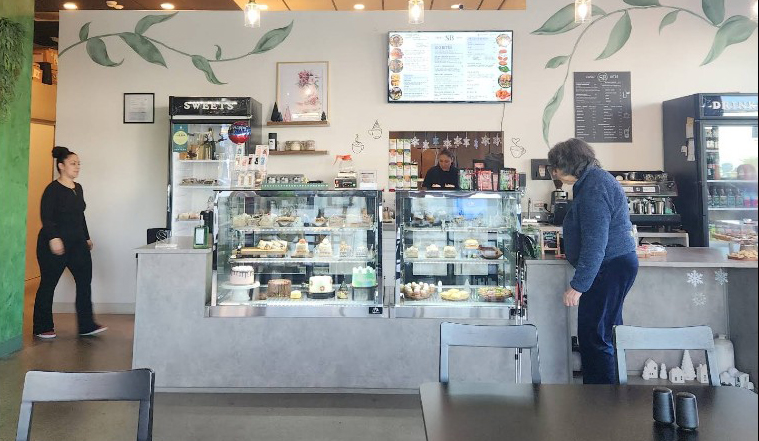
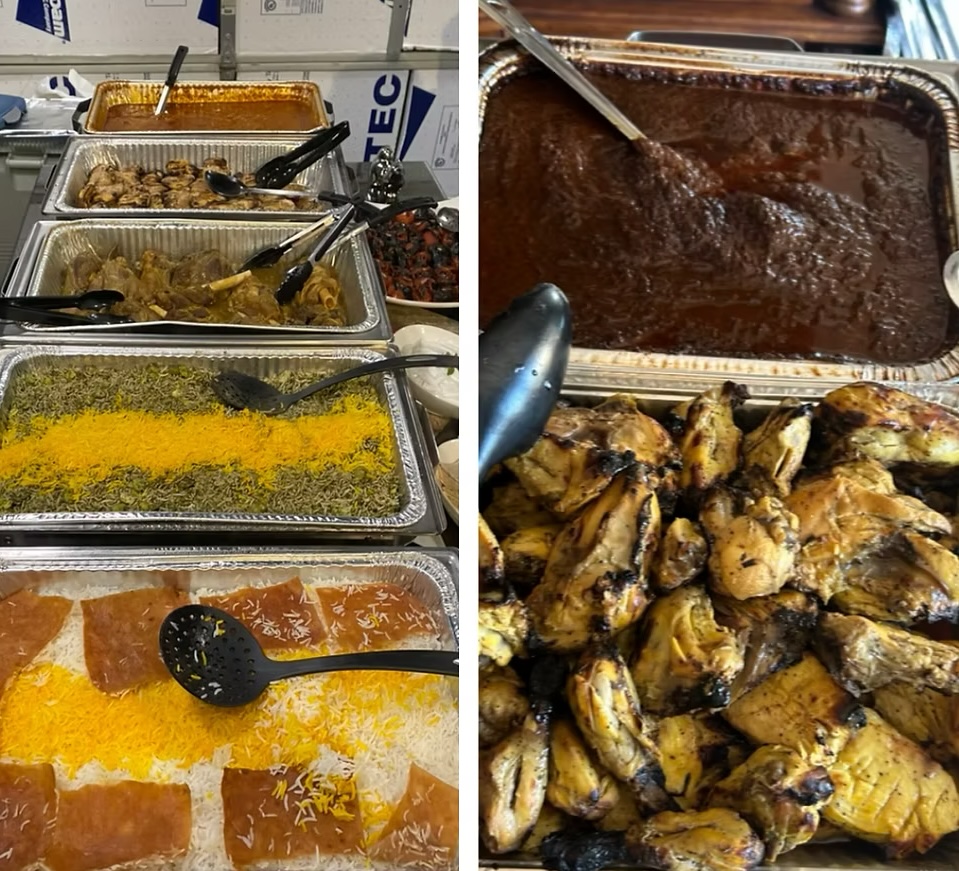


This stretch of San Pablo is not overly attractive. There are some fine old retail buildings, but also several long-empty storefronts. I think the fact that the area is a bit pockmarked contributes to its resistance to sweeping gentrification, keeping rents lower, and allowing some of these international mom and pops to gain a foothold. The neighborhood is the better for it.
After sampling some of the offerings along these blocks, one can head 3 blocks east east along Addison, where we wrap up at Strawberry Creek Park. Finding your tribe is an important beachhead when starting in a new place. But as important is finding a place where you may meet the other tribes, and one of the best ways is at the local neighborhood park. And I am not sure you could conjure a more ideal little park than this one.
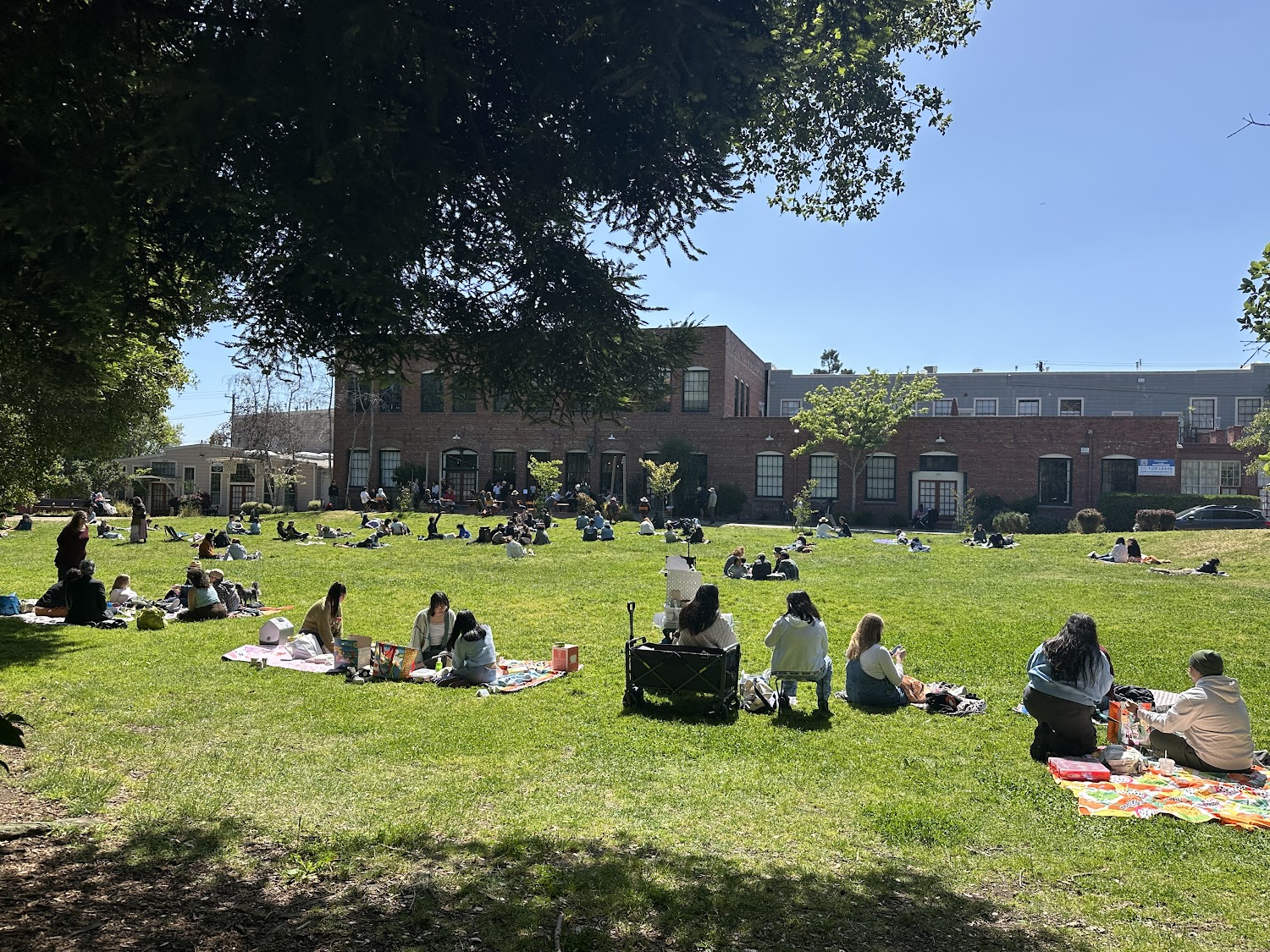
Sited on a former rail line, it is lined on one side with old industrial buildings that were served by the old freight trains. These buildings now house a potpourri of non-profits, neighborhood serving organizations, and a coffeehouse. They frame a large lawn , a playground, and the namesake creek that has been day-lit , offering a bit of the wild in this urban setting. The park draws all of the neighborhood; a mix of families in quintessential East Bay bungalows, Berkeley students in modest apartments , lower income residents of nearby affordable housing, and other assorted bohemians , which had to be our category. It is this neighborhood that in part allows the nearby commercial district’s shops to flourish, and this park allows all to co-mingle.
Big change, such as retirement, inevitably leads to reflection. It is shocking that I first came to San Francisco 37 years ago. Wide-eyed, naive, and not averse to eating LaChoy Chow Mein out of a can. But those Friday lunches so long ago began to open up the world for me, and its never really stopped.
Amidst this repugnant government sanctioned period of hate we find ourselves in, I am choosing to keep the faith that the essence of this neighborhood, the vibrancy that comes from living among people from other places, is of too much value to the majority of us to see it trampled on. Time to push back.
 urban ambles