They sit quietly on tree-lined neighborhood streets. Often surrounded by single family homes , small apartment buildings and bits of retail, the branch library tucks itself gently into these neighborhoods, elegant public buildings at home in these more modest settings. San Francisco and The Bay Area are blessed with many fine examples, many of which are “Carnegie Libraries”.
In one of the great civic gestures , wealthy businessman Andrew Carnegie donated millions of dollars to build libraries across the country. The program began in 1886, and as the program became more established in the 1890s, the Carnegie Foundation began receiving requests from municipalities across the country to construct libraries. An astonishing 2,509 libraries would be built over the next 45 years, including main libraries, university and school libraries, and branch libraries.
In 1901, San Francisco Mayor James D. Phelan secured a commitment from Andrew Carnegie for a grant of $750,000 to be used for the construction of a central main library and an unspecified number of branches. In a rare personal letter, Carnegie stipulated that “About half (not more, I think less) of this sum should be expended on the central library and the remainder on branch libraries”. The grant also included the standard Carnegie stipulations that the city furnish building sites and commit $75,000 per year for maintenance and operations. San Francisco received funds to build 7 branch libraries, with many more built throughout the Bay Area.
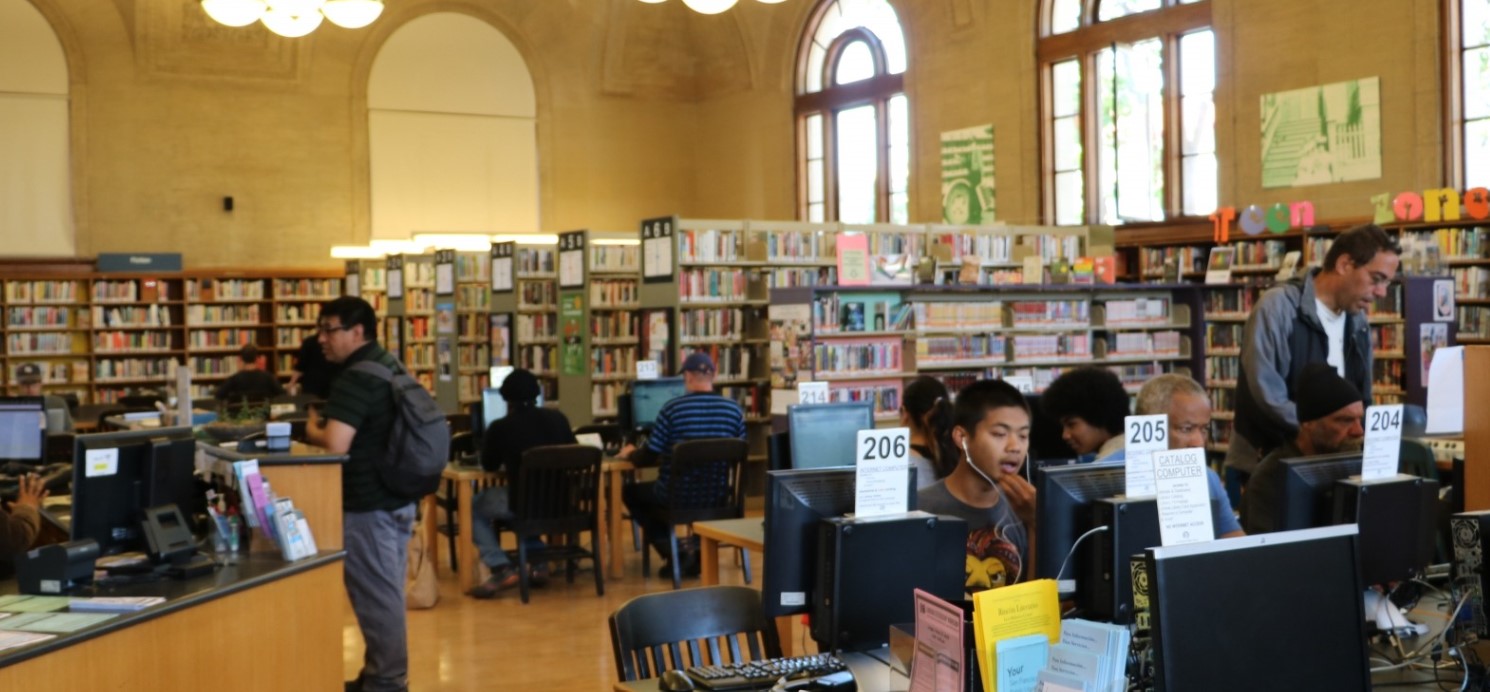
Most of the libraries still stand, and present a scaled down bit of civic grandeur, often employing a classical language to convey the simple program contained within, primarily a single large reading room for the neighborhood. With the libraries often set on busy neighborhood commercial streets, the interior of the library offers a peaceful reprieve. Within these hushed confines, the sun streams in through generous reading room windows on an eclectic mix of neighborhood denizens, seated amidst a modest collection of books, periodicals, and computers. On any given day , one will see the community in full, students studying, seniors reading a newspaper on a stick, or people without internet access surfing the web. I lived in a number of these neighborhoods when I first moved here, and remember them all well. Here is a brief tour of four of San Francisco’s amazing Carnegie Libraries:
Golden Gate Valley
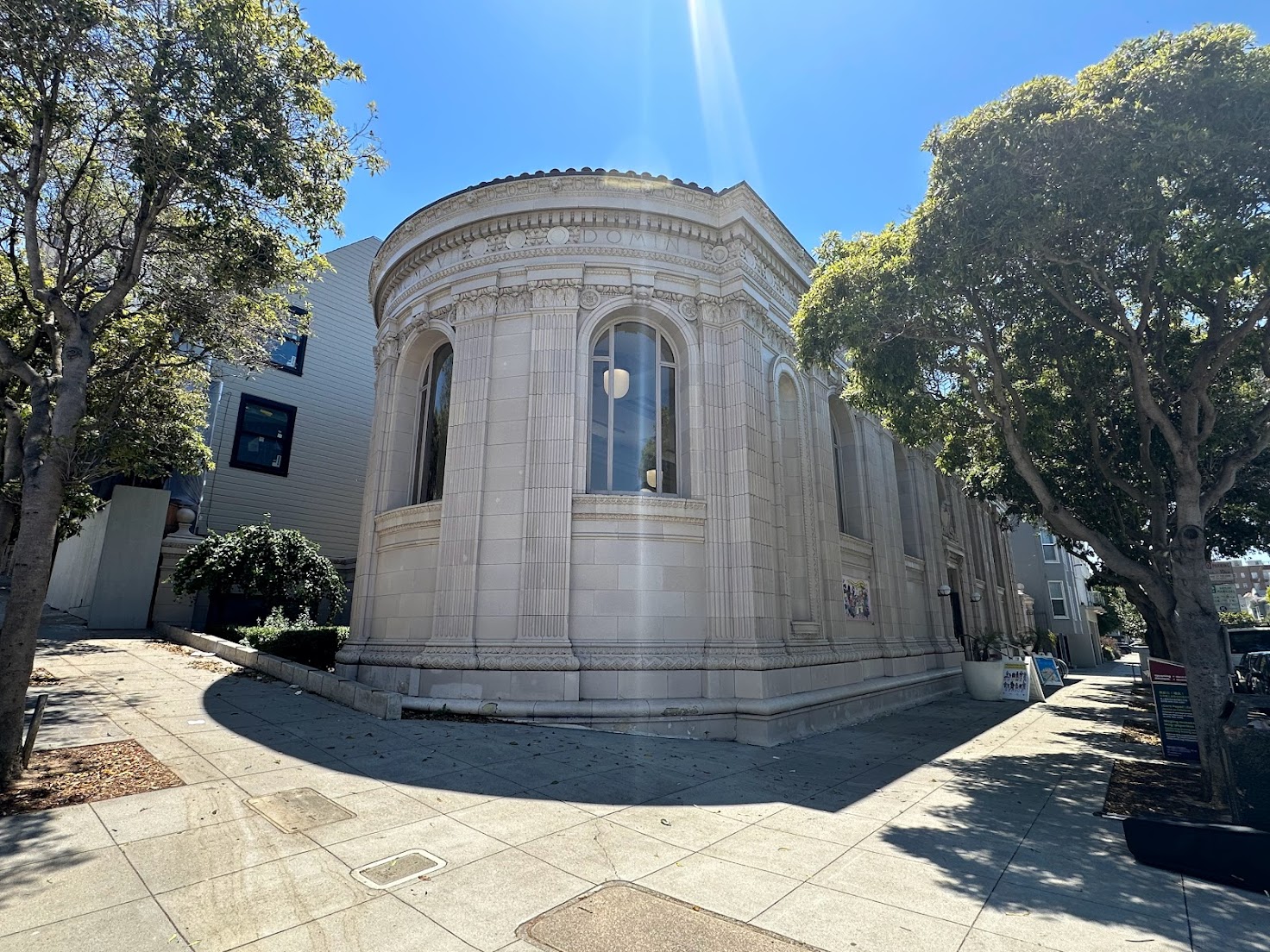
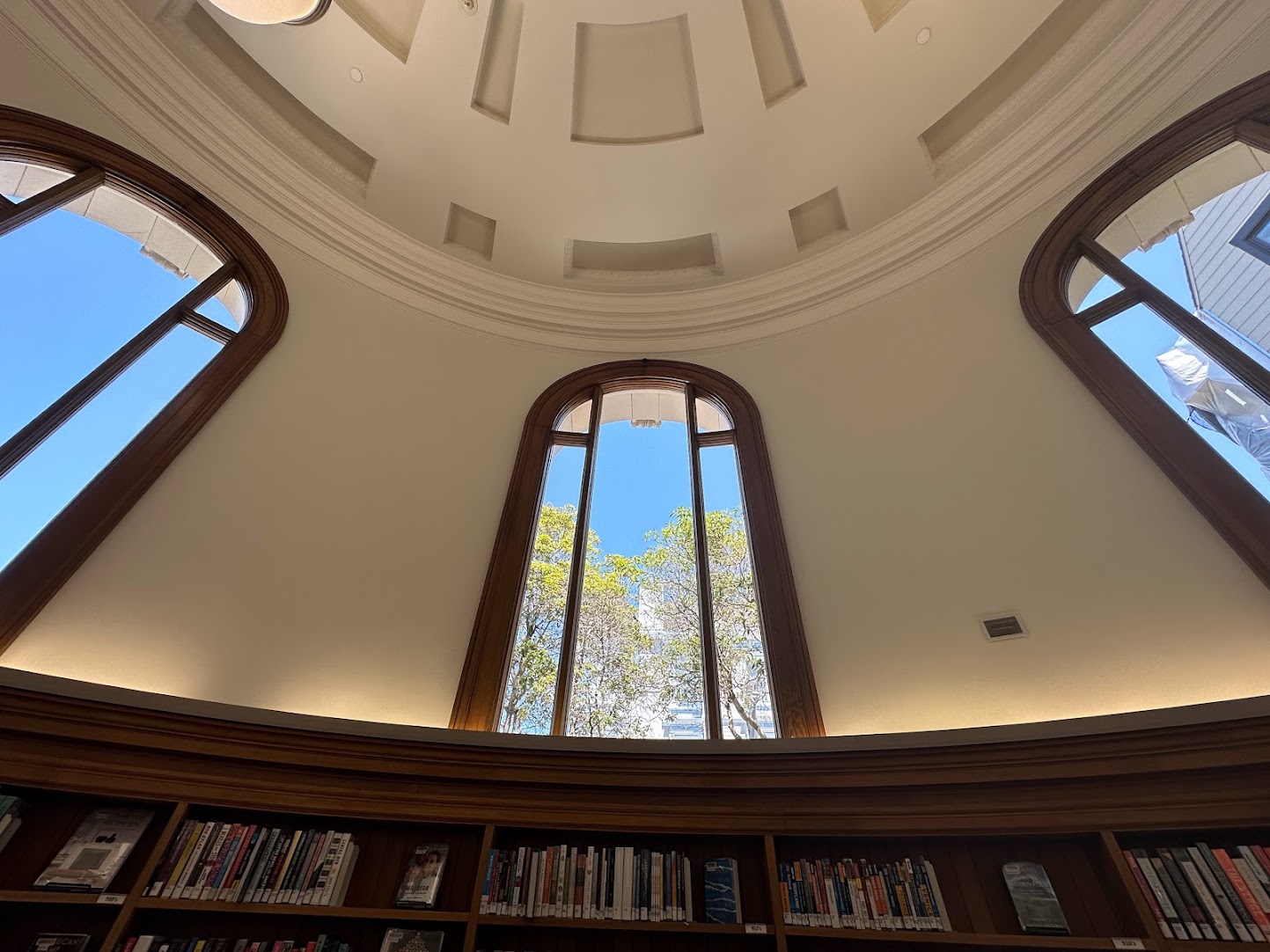
Shortly after moving to San Francisco in 1988, I stumbled upon this library, literally. I was job-hunting, and wore myself ragged dropping off resumes, checking out offices, and periodically, making phone calls and checking messages. This library became one of my “offices”, a place to make a call, or rest my weary feet. Opened in 1918, it was designed by Ernest Coxhead, a highly imaginative architect who modeled the small building on a Roman basilica. The library sits on a very small parcel, right at the sidewalk, and comes to the corner with an elegant apse that contains a small reading alcove inside. It possesses a grandeur that belies its small size (note the houses on either side). I hadn’t been in this library in 30 plus years, but there were the same chairs in the apse (albeit new ones), and I was right back in 1988- hopeful of the future, surrounded by the Literature section, and wondering if I would be able to glue my heel back on.

Presidio Branch
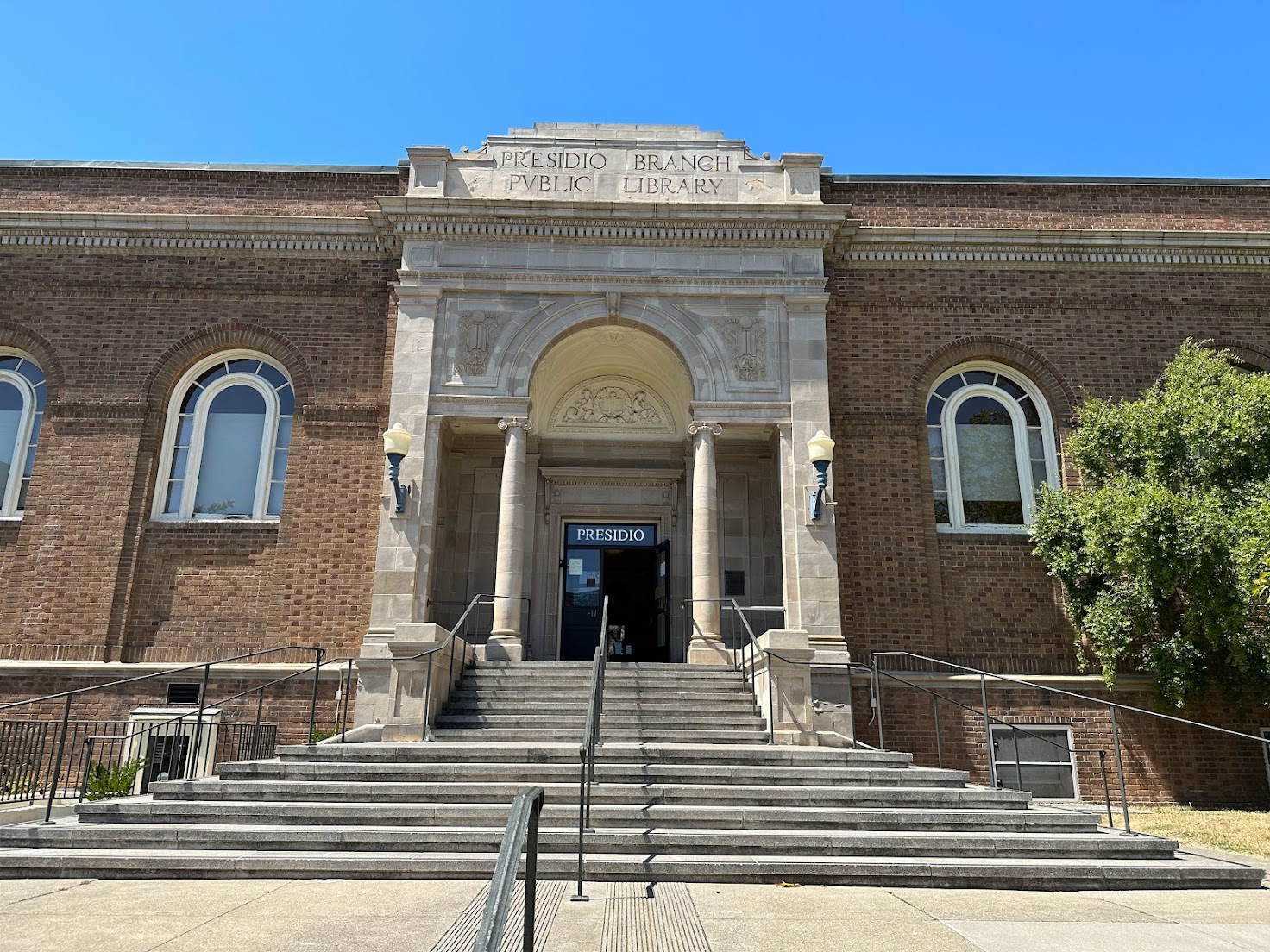
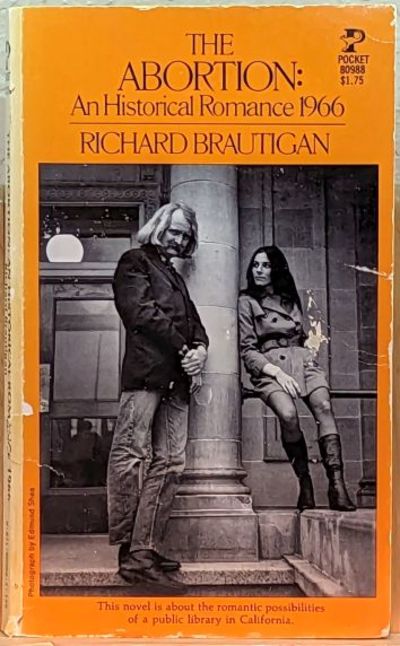
Sitting up the hill from the Golden Gate Valley branch, the Presidio Branch is an elegant Italian Rennaissance styled library done in brick and limestone. It was designed by G. Albert Lansburgh and completed in 1921. What sets this library apart is its lovely lawn and signature entry steps. Having landed a job in San Francisco, I now explored the city end to end, and sought out this library because it was the setting of a novel I had been reading – “An Abortion , an Historical Romance”, by Richard Brautigan. In the novel, the library acts as a repository of unpublished manuscripts, and any author could bring one in and deposit it in the library. I asked the weary librarian about this , and having no doubt answered the query many times, sighed- “No sir, we will not accept your manuscript.” “Well I harrumphed, I suppose I may as well get a San Francisco Public Library card”.
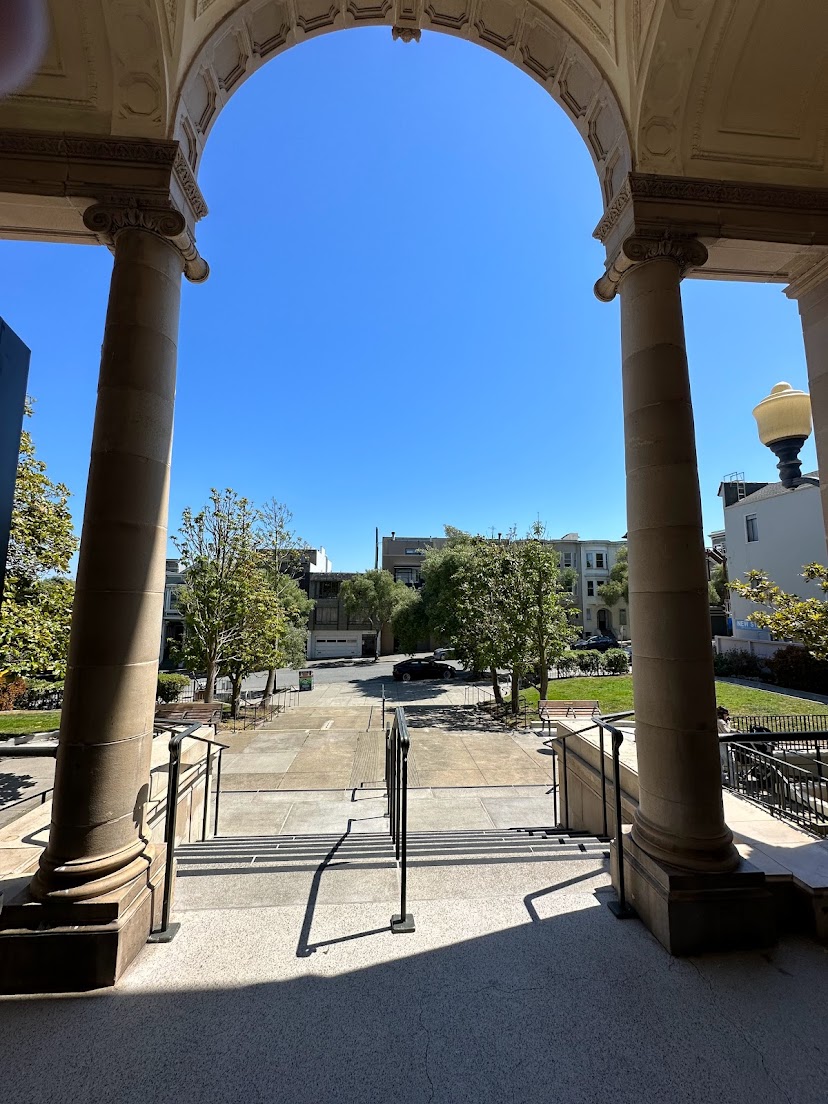
The delightful portico offers a marvelous prospect on Sacramento Street, and along with its lovely green space, a pleasant place to start that newly acquired book.
Richmond Branch
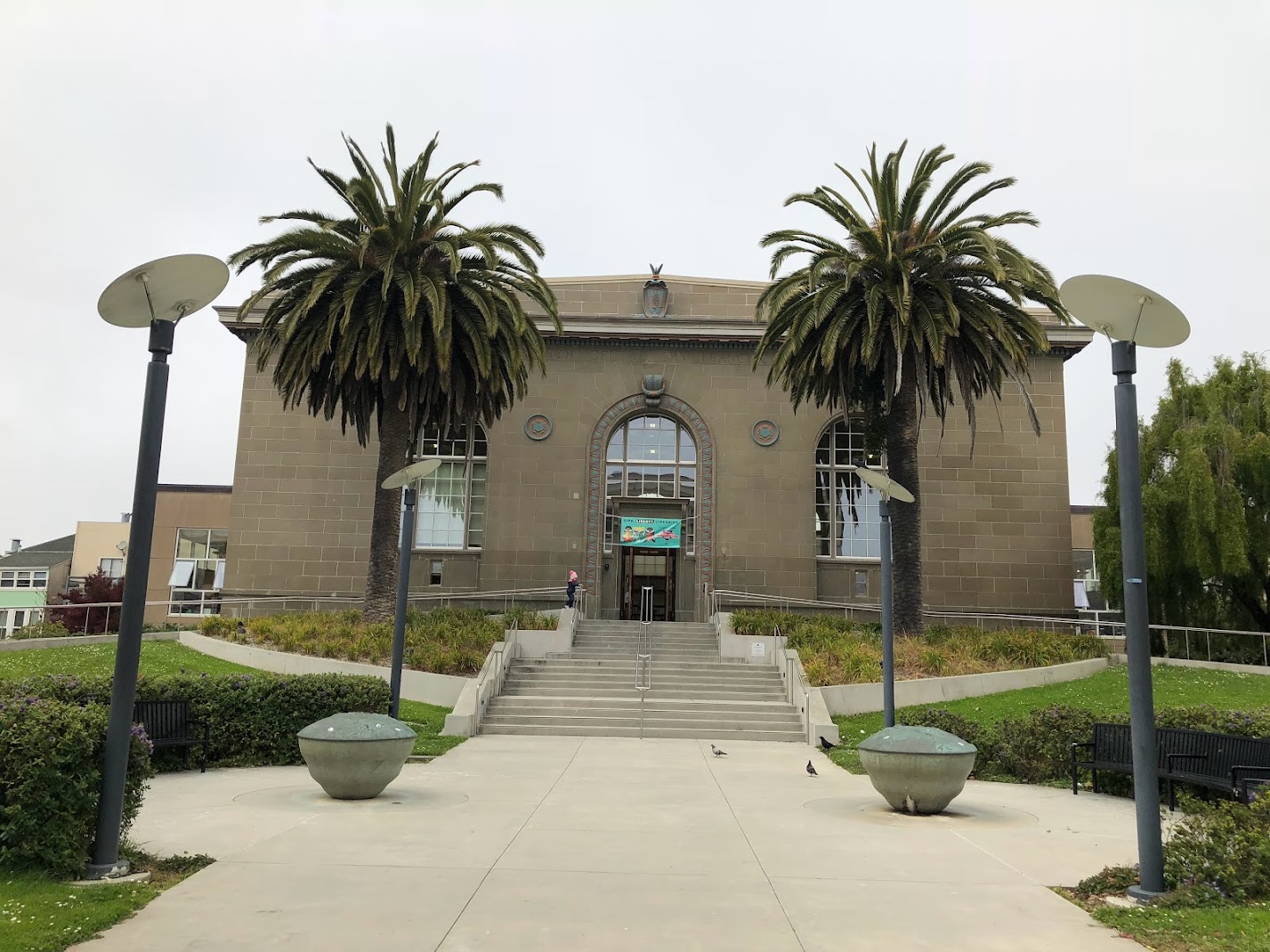
Several years later, I spent a year lost in the fog of the Richmond District. Most of that year was either spent getting some sun at work downtown, or staying warm at one of the many Irish pubs in the neighborhood. I always felt a strong literary presence in the western part of the city, perhaps part weather, part alcohol, part coffeehouses, and of course, bookstores such as the magnificent Green Apple. I ended up falling in love with the neighborhood. And it too had its own Carnegie Library, built in 1914, designed by Bliss and Faville in the Classical Revival style. It reflects the neighborhood today, with a large collection of Russian and Chinese literature, and all signs in the library are posted in those 3 languages, reflecting its proximity to “Little Russia” and the largely Asian Clement Street neighborhood nearby.
Like the Presidio Branch, it too sits on a generous lot. Perhaps to offset its often foggy location, its signature has always been 2 large palms out front, as if to tease you with dreams of a Mediterranean climate;that climate somewhere other than here. Best to hustle inside and find a chair.

Mission Branch
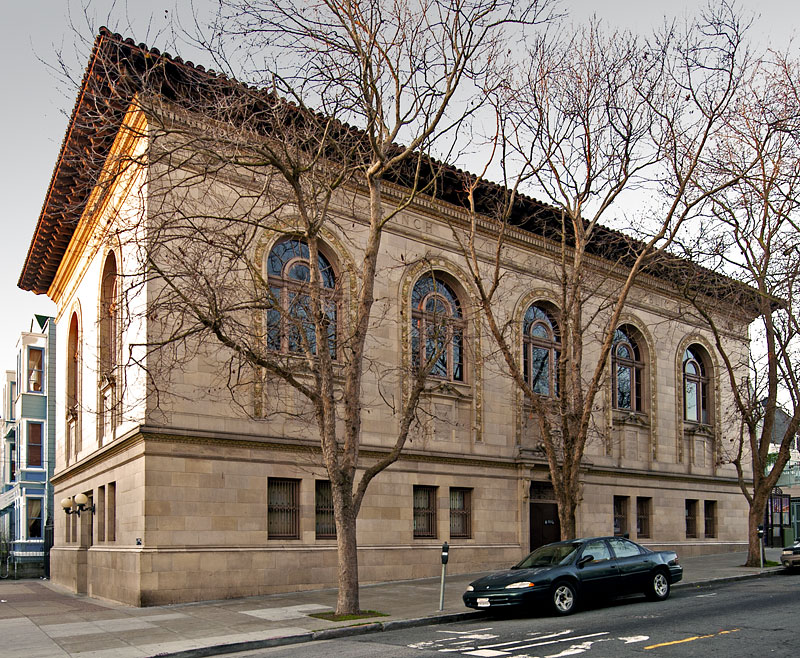
Finally, the Mission Branch, close to the 24th Street BART Station. After the year in the fog, I was determined to find sunnier climes, and the Mission neighborhood delivered. When one exits the train at 24th heading west, you come very quickly to this branch. Unlike the others , this is a true urban palazzo, designed in high Italian Renassance style by G. Albert Lansburgh. This library is slightly larger, with a Ground Floor of support spaces, thus making the schema of the palazzo (large public room over the Ground level support) a natural.
The surrounding Latinx Mission District neighborhood is cacophonous; music , hawkers, homeless; with the smell of grilled meats from the many nearby taquerias filling the air. But inside, up the stairs, a sanctuary from all below. It too reflective of the neighborhood, with the largest collection of Spanish language books and periodicals in the City.
I continue to be moved by these modest monuments of public life. Hatched 100 years ago by an East Coast industrialist, all generally designed in a variant of a Classical language, they each over time have become distinct, as they reflect their diverse neighborhoods. This tour was also a reminder that while downtown San Francisco struggles to find its footing , the vast majority of San Francisco- its neighborhoods- have never lost theirs.
 urban ambles